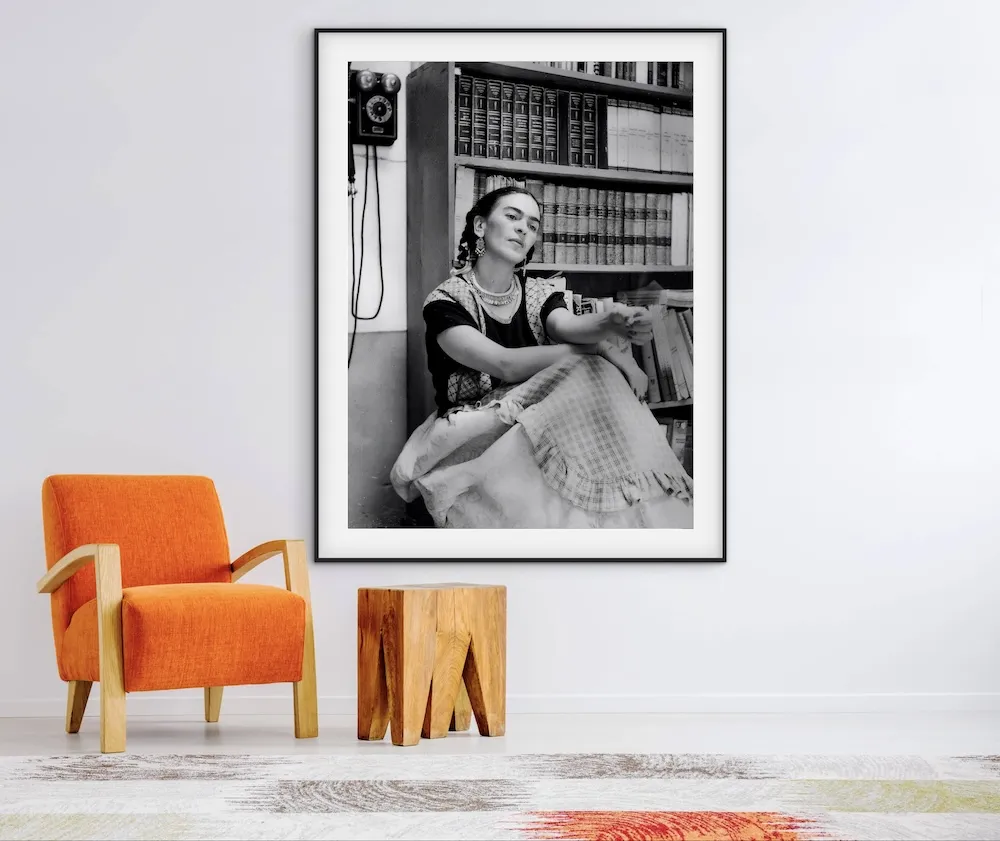
Tate Modern’s current show, Frida: The Making of an Icon, runs until 3 January 2027, and it’s already the best-selling exhibition in the gallery’s history, ahead of even the 2017 Hockney retrospective.
Part of the exhibition’s point, actually, is to interrogate that popularity — there’s a whole room dedicated to the sheer volume of Frida-branded stuff the world has produced, from Barbie dolls to tequila bottles.
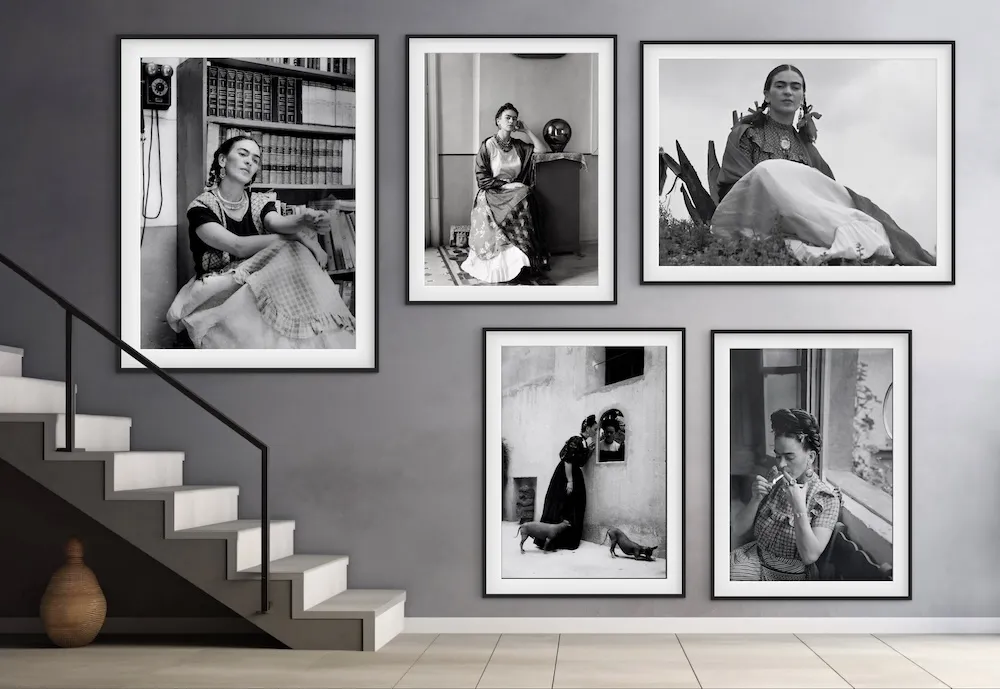
The show is as much about how Kahlo became a face on a tote bag as it is about the paintings themselves. That’s worth pausing on, because the tote-bag version of Frida Kahlo — colorful, defiant, flower crown, unibrow as a kind of logo — has flattened a life that was considerably stranger and harder than the branding lets on. Here’s some of what tends to get left out.
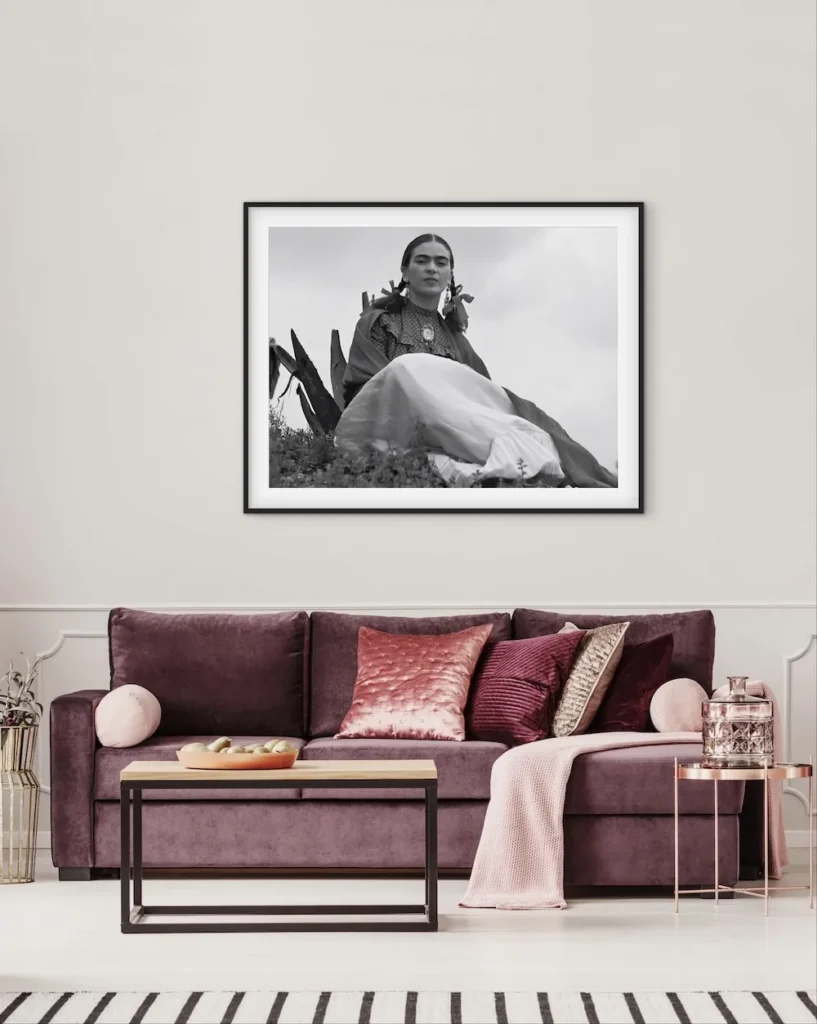
She Lied About Her Birth Year on Purpose
Kahlo was born in 1907, but she told people for most of her adult life that she was born in 1910. That wasn’t vanity. 1910 is the year the Mexican Revolution began, and she wanted her birth to line up with the birth of modern Mexico — she considered herself a child of the revolution in a fairly literal sense. It’s a small lie, but it tells you a lot about how she thought of herself: as a symbol first, a person second, decades before anyone else started treating her that way.
The Accident Is Even Worse Than the Short Version
Most people know Kahlo was in a bus accident as a teenager and that it caused her lifelong pain. The details are worse than that summary suggests. In 1925, the wooden bus she was riding collided with a streetcar, and a steel handrail impaled her, entering through her hip and exiting through her pelvis. Her spine was fractured in three places, her collarbone and ribs were broken, her right leg was broken in eleven places, and her pelvis was crushed. She wasn’t expected to survive, and she spent much of the rest of her life in and out of medical corsets, in near-constant pain, and underwent somewhere around thirty surgeries over her lifetime. In her final years she lost part of her right leg to gangrene.
She started painting during the months-long convalescence after the accident. Her father, a photographer, rigged a mirror above her bed frame so she could see herself while lying flat, and that’s essentially how the self-portraits began — not as a stylistic choice, but because a fixed mirror over an immobile body was the only subject reliably available to her.
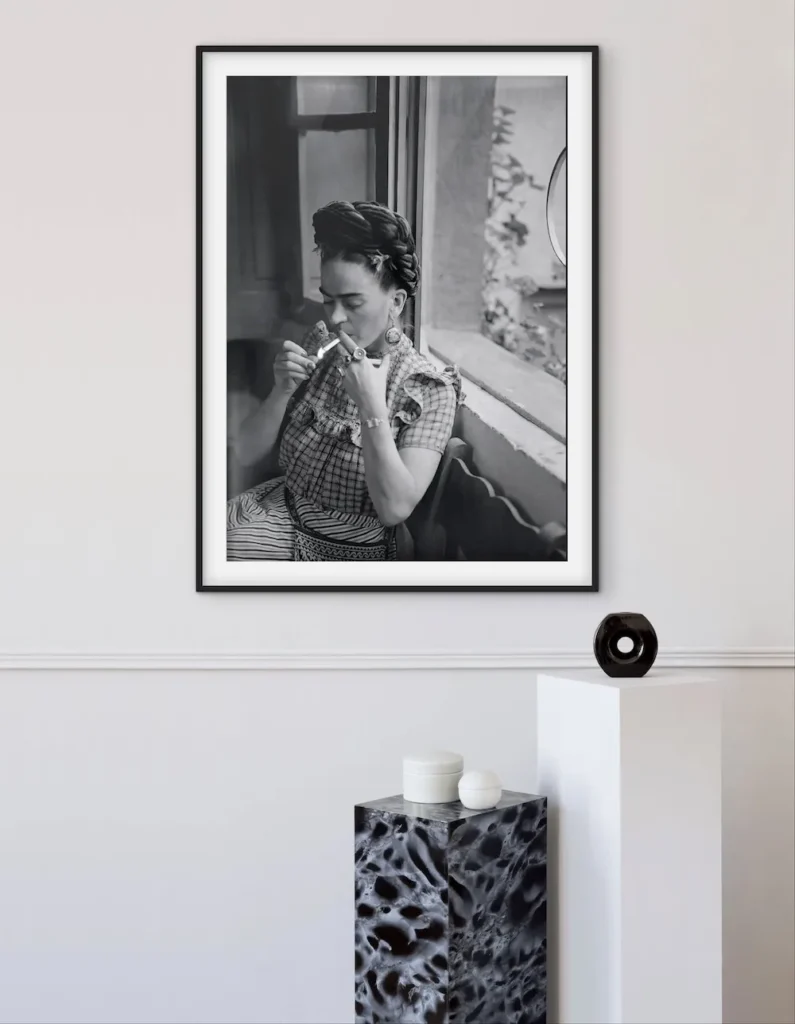
The Clothes Were Partly a Cover-Up
The Tehuana dresses she’s known for — long, embroidered skirts, elaborate headpieces — are usually read as a political and cultural statement, and they were: she was drawing on the dress of women from Oaxaca’s Isthmus of Tehuantepec, a region associated with a matriarchal social structure, and it was a deliberate embrace of indigenous Mexican identity over European fashion. But the length and structure of those skirts also did practical work. They covered a right leg that was thinner and shorter than her left, a lasting effect of childhood polio compounded by the bus accident. The look that’s now treated as pure style had a functional half to it that rarely makes it into the retrospectives.

She Barely Sold Anything While She Was Alive
Given how ubiquitous her image is now, it’s strange to realize how commercially unrecognized she was during her lifetime. She had only one solo exhibition in Mexico while she was alive, in 1953, a year before her death, and by that point she was so unwell that she reportedly attended it lying in a four-poster bed that had been moved into the gallery. The Louvre acquired one of her paintings during her lifetime, which made her the first twentieth-century Mexican artist in that collection, but that was more the exception than the rule. Diego Rivera was the internationally famous one; she was, for most of her career, known primarily as his wife. The scale of her posthumous fame — the merchandise, the record ticket sales, the fact that this Tate show exists at all — is really a phenomenon of the 1980s onward, decades after she died in 1954.
Her Menagerie Was Basically a Second Household
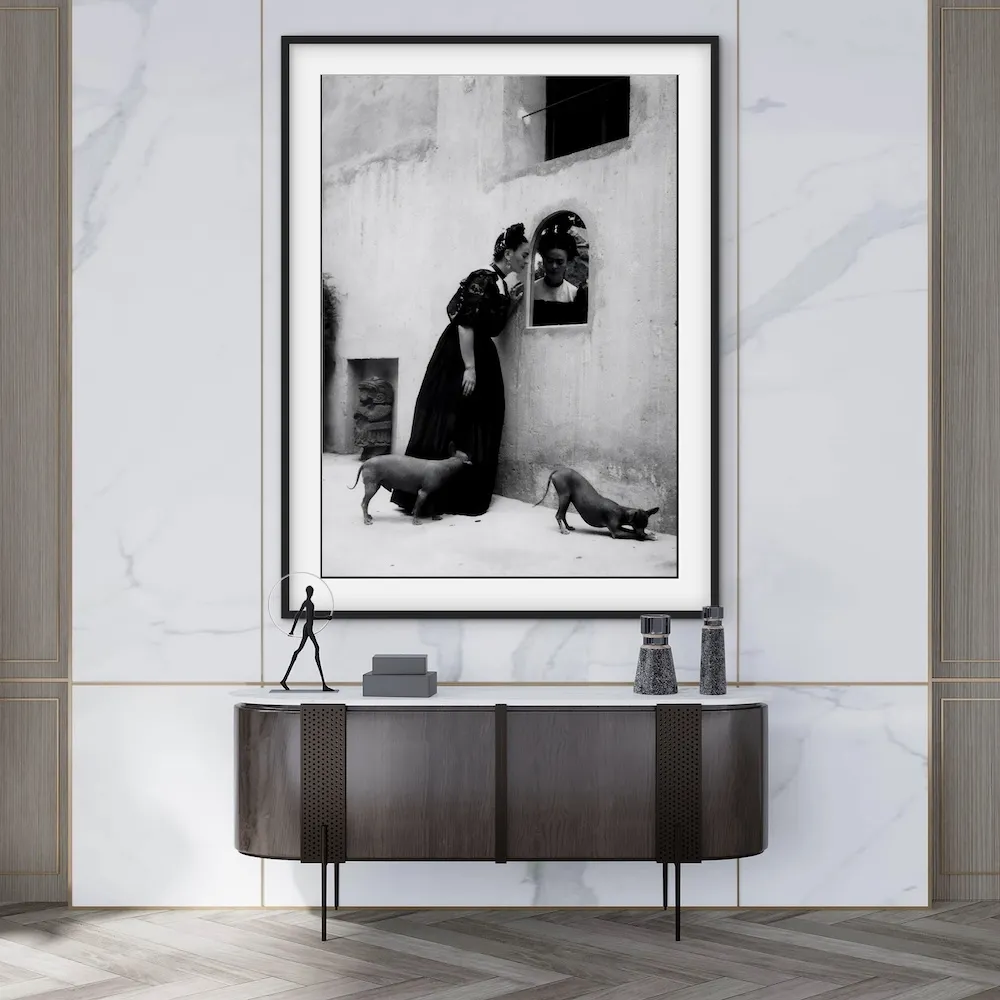
Kahlo and Rivera’s Mexico City home, Casa Azul, doubled as an informal zoo. She kept spider monkeys, an eagle, parrots, a fawn, and several hairless Xoloitzcuintli dogs, an ancient Mexican breed. The animals show up constantly in her paintings, often positioned around her like companions or protectors, and there’s a reasonable argument that they functioned as a kind of substitute family — she had multiple miscarriages and was unable to carry a pregnancy to term, something that shows up directly and painfully in several of her most well-known works.
Politics Wasn’t a Side Interest
Kahlo was a committed Communist for most of her adult life, and this wasn’t background noise to her art practice — it was central to how she saw herself. She and Rivera briefly hosted Leon Trotsky and his wife after Trotsky was exiled from the Soviet Union, and Kahlo had a brief affair with him during that stay. Her political commitments intensified rather than faded in her final years; some of her last public appearances, in a wheelchair and against doctors’ advice, were at political demonstrations.