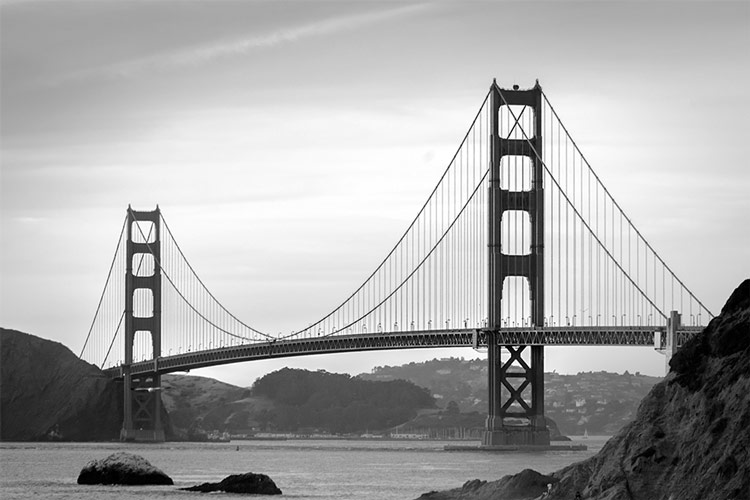
The Golden Gate Bridge was the longest suspension bridge span in the world when it was completed in 1937. It has become one of the most internationally recognized symbols of San Francisco, California and of the United States.
Before the bridge was built, the only practical short route between San Francisco and Marin County was by boat. The ferry service began in 1820 for the purpose of transporting water to San Francisco. The construction cost more than $35 million and the opening celebration began in May 1937 and lasted for one week.
The day before the bridge was opened for vehicle traffic, 200,000 people crossed on foot and roller skates. In May 1987, as part of the 50th anniversary celebration, the bridge was again closed to traffic and pedestrians were allowed to cross the bridge. This celebration attracted 1 million people. Ineffective crowd control meant the bridge became congested with about 300,000 people, causing the centre span of the bridge to flatten out under the weight. Although the bridge is designed to flex under heavy loads, and was estimated not to have exceeded 40% of the yielding stress of the suspension cables, officials have stated that uncontrolled pedestrian access will not be considered as part of future anniversary events.
Today this bridge is popular with pedestrians and cyclists as well as cars, was built with walkways on either side of the six traffic lanes.
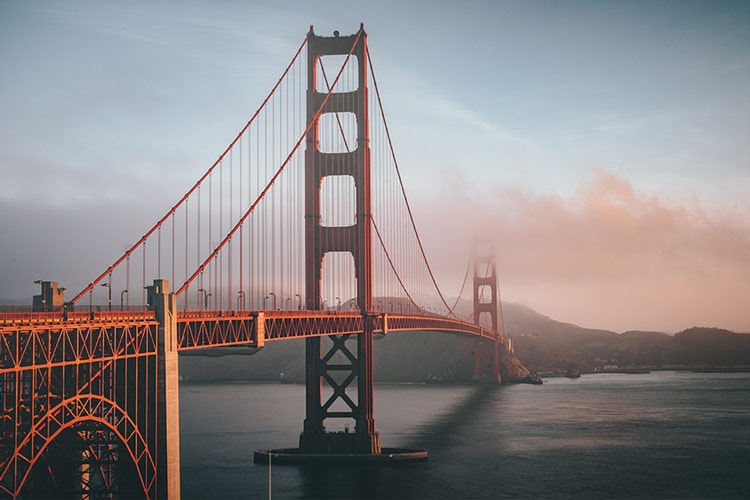
The colour of the bridge is an orange vermilion called international orange. The colour was chosen because it complements the natural surroundings and enhances the bridge’s visibility in fog.