
Few artists in the history of music have left as deep and lasting a mark as Billie Holiday. Known affectionately as Lady Day, Holiday transformed jazz singing into an intimate, emotional art form — one that could express joy, sorrow, and defiance all in a single breath. Her voice, both fragile and powerful, remains one of the most distinctive in 20th-century music.
Early Life and Struggles
Born Eleanora Fagan in Philadelphia in 1915, Billie Holiday’s early years were marked by hardship. She grew up in Baltimore during a time of deep racial and social inequality, often living in poverty. Her mother, Sadie Fagan, worked long hours, and Billie spent much of her childhood in unstable environments.
Holiday found solace in music. Inspired by the great blues singers Bessie Smith and Louis Armstrong, she began singing in local clubs in her teens. Her stage name — Billie Holiday — was a tribute to film star Billie Dove and her father, Clarence Holiday, a jazz guitarist.

The Rise of Lady Day
By the early 1930s, Holiday’s talent had drawn the attention of New York’s jazz elite. She made her first recordings at just 18, under the guidance of producer John Hammond, who introduced her to Benny Goodman. Her voice wasn’t powerful in a traditional sense — it was smoky, tender, and deeply expressive. She had an uncanny ability to manipulate phrasing and rhythm, transforming even simple songs into emotional experiences.
Her collaborations with Lester Young, the tenor saxophonist who nicknamed her “Lady Day,” are now legendary. Together, they developed a conversational, call-and-response style that shaped modern jazz singing.
Signature Songs and Style
Billie Holiday’s greatest power lay in her interpretation. She didn’t just sing lyrics — she lived them.
Some of her most iconic songs include:
- “God Bless the Child” (1941) – A semi-autobiographical anthem about independence and self-respect.
- “Lover Man (Oh, Where Can You Be?)” (1944) – A haunting ballad of longing and vulnerability.
- “Don’t Explain” (1944) – Written after an affair, the song captures quiet heartbreak with remarkable restraint.
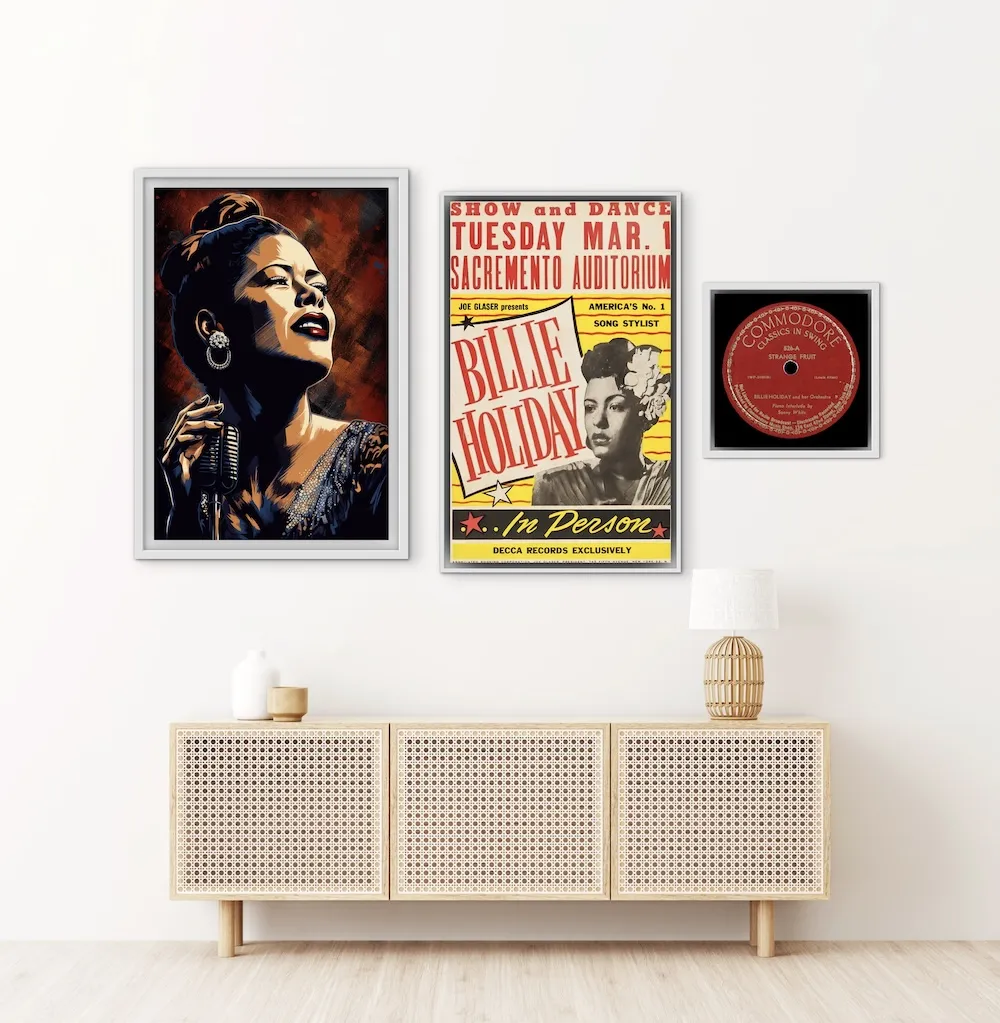
- “Strange Fruit” (1939) – A chilling protest against the lynching of Black Americans, and perhaps her most courageous work. The song’s graphic imagery and mournful delivery made it a defining moment in both her career and American social history.
The Price of Pain and Fame
Holiday’s life was as turbulent as her music was beautiful. She faced relentless racism, exploitative management, and a deeply unjust legal system. Her struggles with addiction — partly a result of trauma and the pressures of fame — led to arrests, the loss of her cabaret license, and years of public scrutiny.
Despite these battles, her artistry only deepened. Even as her voice aged and grew raspy in later years, her interpretations became more poignant and raw. When she sang, you felt every ounce of her lived experience.
Legacy and Influence
Billie Holiday died in 1959 at the age of 44, but her legacy has never dimmed. She paved the way for generations of vocalists — from Nina Simone and Etta James to Amy Winehouse and Norah Jones. Her phrasing, timing, and emotional honesty continue to influence singers across genres.
In 2000, her song “Strange Fruit” was named the Song of the Century by Time Magazine, and in 2021, Andra Day’s portrayal of Holiday in The United States vs. Billie Holiday reintroduced her story to a new generation.

Why Billie Holiday Still Matters
Billie Holiday’s music is timeless not just because of its beauty, but because of its truth. Her voice — weary, defiant, tender — speaks to the universal human struggle for love, freedom, and dignity. In every note, she reminds us that art can be both personal and political, fragile and fearless.
Lady Day didn’t just sing songs; she told the story of a nation through her pain and grace. And though decades have passed, her voice still lingers — smoky, haunting, unforgettable.


