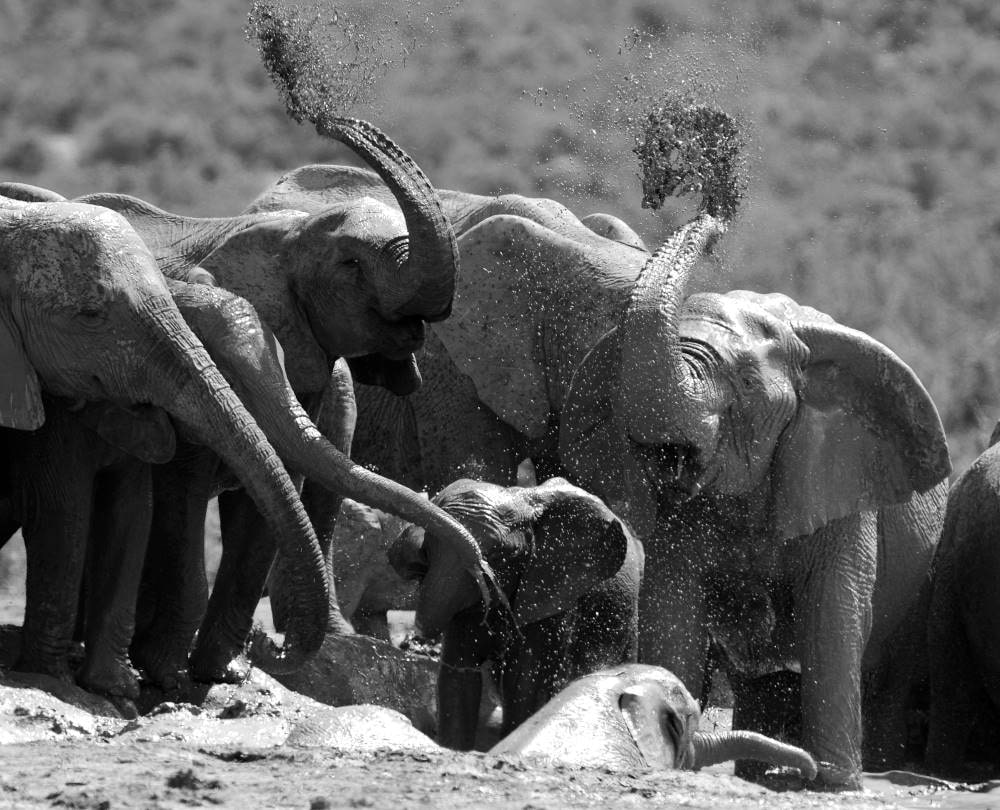
Elephant Family by Tate Husband

Females are the boss
Elephant families have a matriarchal head, meaning that an older, experienced lady elephant leads the herd. A family usually consist of a mother, her sisters, daughters their calves. Occasionally, non-related elephants join to form families. Female family units range from three to twenty-five elephants. Sometimes herds of female elephants combine with groups of bull elephants to form larger clans.
They babysit
Female elephants help look after each other’s calves. Babysitting other female’s calves is important for elephant development; young females learn how to look after the young, and the calves are shown how it’s done.
They bond
Elephants are known to develop strong, intimate bonds between friends and family members. There have been reports of elephants forming lifelong friendships with each other, and they even mourn the death of their loved ones.
They walk in a single file
Elephants actually do actually walk in single file when they on the move, for instance, while in search of food and water. The calves will sometimes hold on to their mother’s tails with their trunks to keep up, while other female elephants surround them to protect them from danger.
Males hang out in groups, too
Adult male elephants live a nomadic and solitary life. When a male elephant reaches puberty, around 12 to 15 years of age, he will gradually become more independent of his family until he breaks away completely, to either roam alone or find a loosely-knit group of male elephants to join.
Herds can separate
Although they tend to be close, an elephant family can split. This decision is influenced by ecological factors, such as the availability of food and water in the area, and social factors, such as how well the elephants get on, the size of the group or the death of a matriarch. As such, different herds living over vast terrain can be interrelated. These ‘bond groups’ keep in touch with each other through rumbling calls and usually stay within a kilometre of each other.


Bath Time by Rebecca Hearfield